
The South Bay Cities Council of Governments remains neutral on South Bay light-rail route
by Garth Meyer
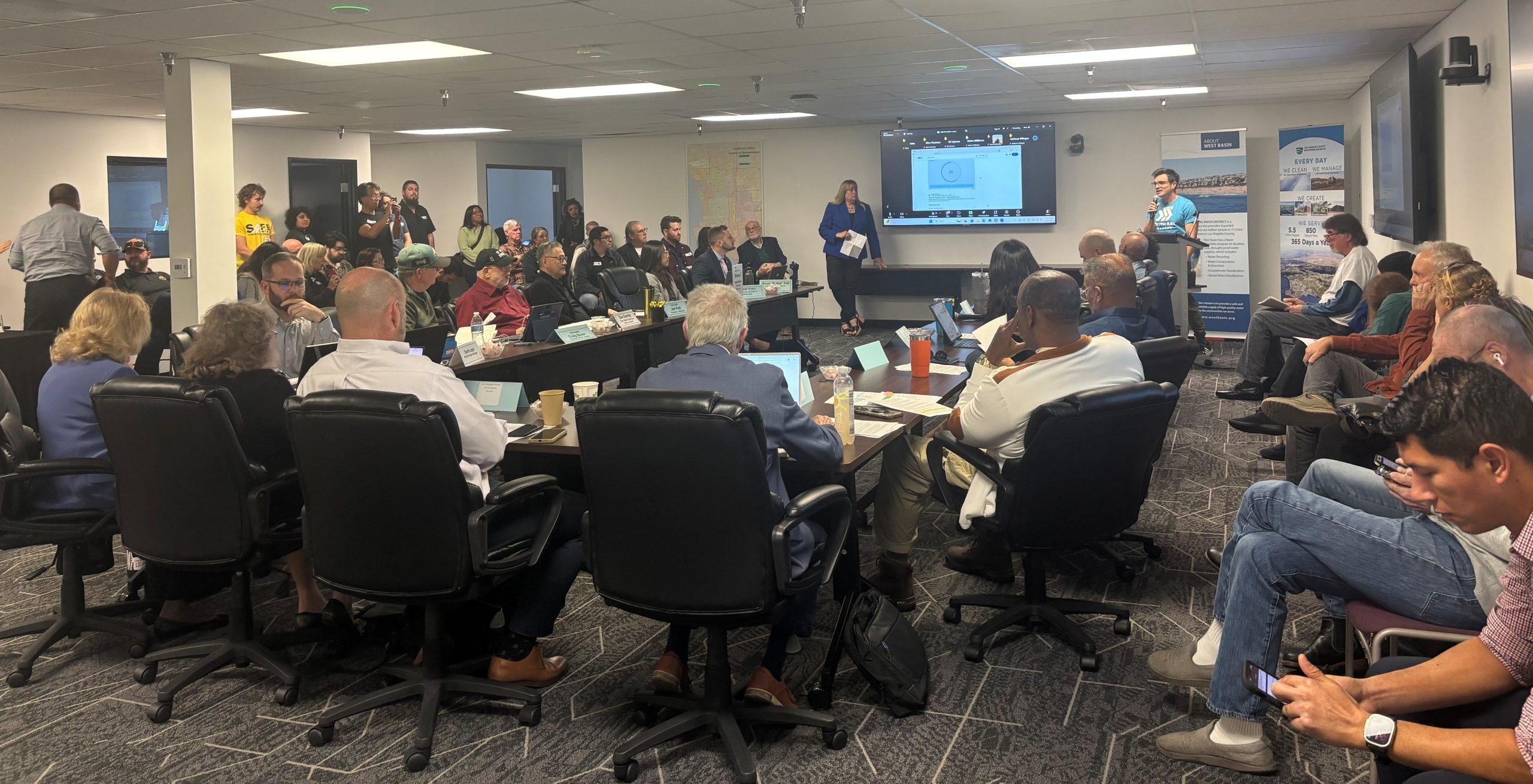
By a 6-4 count Monday, the South Bay Cities Council of Governments’ transportation committee chose to stay its neutral course regarding what route a proposed Metro light rail expansion should take.
The decision included a call for Metro to look at creating a Climate Resilient District for the South Bay – which would draw funding from property taxes to provide transit in the area.
In the Dec. 8 discussion, Mayor James Butts, Jr., of Inglewood, who is also on the Metro Board of Directors, which makes the decision on the potential expansion to Torrance, through Redondo Beach, said, “I am a person that studies,” and he believes that Metro should supply supplemental written responses to all of the issues raised by South Bay cities, especially Redondo Beach – before an Environmental Impact Report (EIR) on the project is certified.
Metro released its revised draft EIR this fall. In January, the Metro board will consider whether to issue a final Report and choose a route.
The three options are to run tracks down a railroad right-of-way between neighborhoods in North Redondo and Lawndale; to run the same route by hybrid (some underground stretches) or for the route to go on raised tracks down the median of Hawthorne Boulevard.
Zein Obagi, Jr. a Redondo Beach city councilman and its South Bay Cities Council of Governments’ (SBCCOG) delegate, made a point that residents live “far closer” to the proposed K-Line route on the right-of-way than the distance from businesses on Hawthorne Boulevard to the raised tracks.
He said that if the right-of-way is chosen, Redondo Beach will file a “meritorious lawsuit.” He said the city has appropriated money for litigation, if needed.
He maintained that Metro has not adequately explained how to deal with alleged toxic soil that would be dug up on the right-of-way during construction (toxins from jet fuel carried by existing daily freight trains and oil from pipes).
John Kaji, a Torrance city councilman who supports the Hawthorne Blvd. route, a minority voice on the Torrance Council, which has endorsed the right-of-way option – said he believes the best path is fully underground.
“The right thing to do is not always the least expensive,” he said.
Don Szerlip, chair of the Metro South Bay service council, a North Redondo Beach businessman and former Redondo city councilman, said that Metro will be “very quick to spend the money elsewhere if we reject what’s going on now, and we may never get the opportunity again.”
Only one stop would appear along the Hawthorne Blvd. route – across from the South Bay Galleria property – besides the end at Torrance Transit Station.
Questions were bandied about Dec. 8; should the committee stay neutral or should it take a position in favor of the right-of-way, along Hawthorne Blvd. or perhaps the no-build option.
A representative from Janice Hahn’s office said the L.A. County Supervisor is a strong supporter of the project, that she shares concerns about cost overruns, but it is not a reason to delay.
A delegate from Lomita, City Councilman Bill Uphoff, suggested the SBCCOG remain agnostic, as did the committee chair, El Segundo Mayor Chris Pimentel.
Obagi, Jr., noted that Lawndale has appropriated funds for a lawsuit of their own. He touted the Hawthorne option as the one with the highest potential ridership.
More directly, Obagi, Jr., said that he heard no one say they will file a lawsuit against the Hawthorne option, if chosen.
“If there’s going to be lawsuits, this body should stay neutral,” Uphoff said.
After three motions and several “abstain” votes, a motion to retain its neutral position passed. ER