
Redondo Beach sets new housing plan after court loss
by Garth Meyer
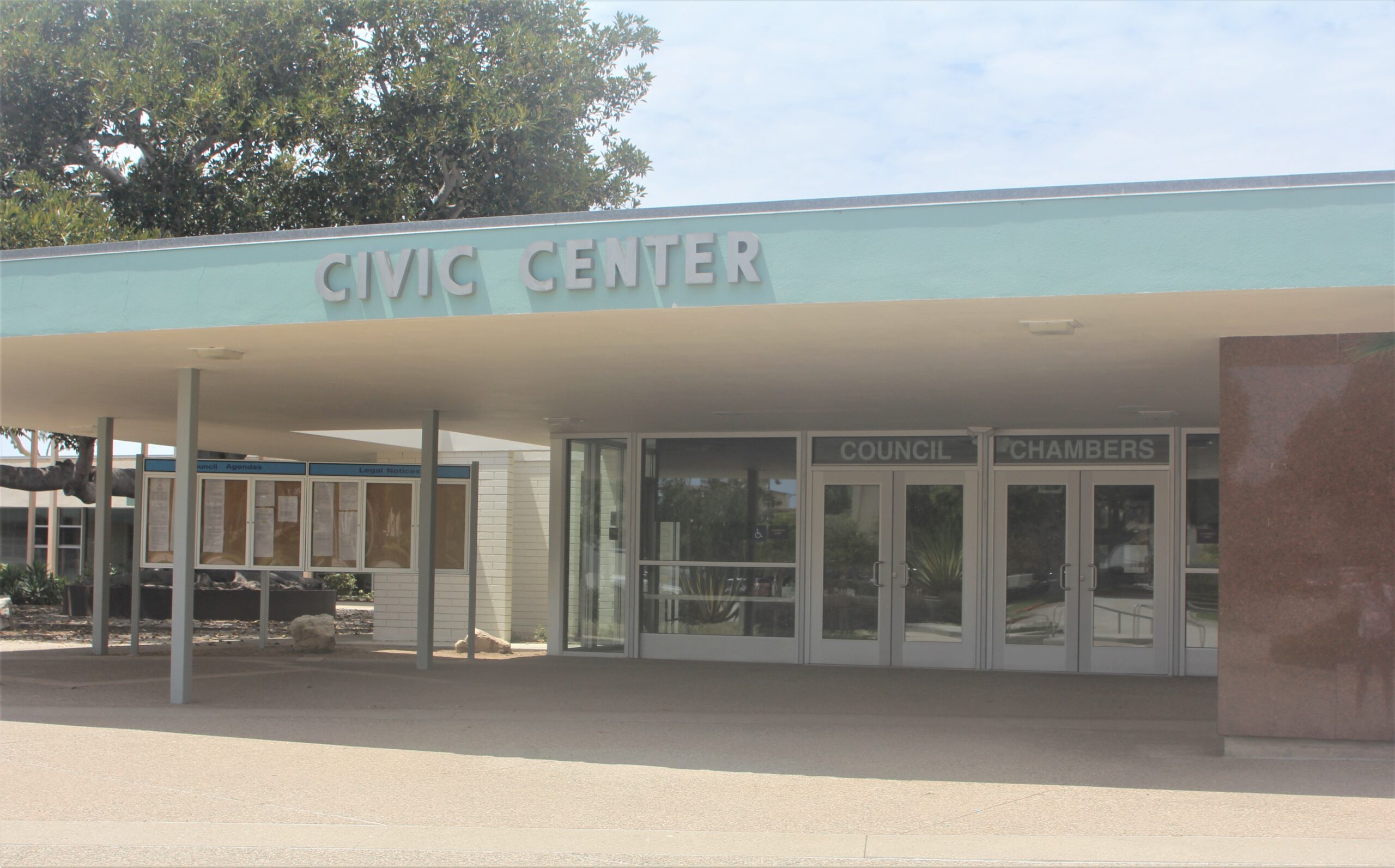
The Redondo Beach city council approved a new Housing Element Tuesday night, looking to retain as much local control over zoning as possible.
The move came in reaction to a loss in court last year which nullified the city’s previous housing plan.
That plan included what are known as overlays – areas that keep open the possibility of alternative development uses.
The new plan has no overlays.
Instead, it increases density allowed on four of Redondo’s five designated new-housing sites, and eliminates a sixth. In addition, the new plan states that new development on these sites requires 50% of its floor space be residential.
Of the individual spots previously chosen for future housing, “North Tech,” at Marine Avenue and Inglewood Avenue, is off the list because the judge ruled it unlikely that housing would be built there, due to a lease between a Vons store and the landowner.
Of the five sites kept in the plan, the one at Kingsdale Avenue and Artesia Boulevard had its allowed density increased from 55 to 65 dwelling units per acre, and height from four to five stories.
Similar increases were made for the site south of the Transit Center (Kingsdale Avenue and 182nd), the FedEx site (South Pacific Coast Highway and Paseo De Gracia Street) and three sites on 190th Street, between Meyer Lane and Hawthorne Boulevard.
For the final spot in Redondo’s new plan, South Bay Marketplace, at Hawthorne Blvd. and 182nd, density went from 55 to 80 dwelling units per acre. The height limit remains the same at seven stories.
In January, Redondo’s new plan went through a seven-day public review. The city planning commission then recommended its approval.
In February, the city sent a preliminary draft to the state Housing and Development Commission and received a response deeming it as “substantial compliance.”
“We (had to make the changes) to avoid Builder’s Remedy, which basically allows a developer to do whatever they want,” said Mayor Jim Light.
“This plan has not changed things drastically,” said City Councilman Zein Obagi, Jr. “We continue to put housing near transportation.”
Housing Elements statewide require each designated lot to be a half acre or larger to be eligible to appear on a city’s list.
“Our hands are tied, but we’re forced to do this by our state, and that’s why it’s important that you vote,” Light said.
“The majority of our (Housing Element) numbers are for affordable units,” said Councilmember Paige Kaluderovic. “The projects that we see are predominantly just a few affordable units with (the rest) market rate units. We’re constantly on our back foot on how to provide affordable housing when these sites we’ve cited don’t get used for that.”
In public comment, Alex Fineman of District Three said, “It’s important not that we do this, but that everyone does it, in cities up and down the state.”
Fineman is a member of South Bay Forward, a grassroots organization focused on housing, transit, and mobility in the South Bay.
“I don’t want to see Builder’s Remedy here, that’s not what I’m about,” he continued. “But Builder’s Remedy is an enforcement mechanism, to make sure that cities like Redondo Beach, and up and down the state, comply with their housing obligations.”
“California is losing Congressional seats, we’re losing electoral votes, because we are losing population to states like Florida and Texas. We all have a statewide obligation to build housing…”
“I’d love to meet with you,” said Mayor Light. “Because some of what you said is a little flawed, but I don’t want to have the debate with you here.”
“Absolutely,” Fineman said.
“The state could better achieve its goals through other tools rather than this blanket mandate,” Obagi, Jr., said.
He made a motion to approve the new plan. Councilman Brad Waller seconded it.
City Manager Mike Witzansky said he’d like to say something.
“This has been a long-standing issue for us… This is no easy feat, and to imply that somehow we are not anything but a housing diverse, rich and abundant community in Redondo Beach is, I think, just an absolute falsehood,” Witzansky said. “We’re more than 11,000 residents per square mile, we are far more dense than any of our neighbors with one exception, Hermosa Beach. We provide an incredible portfolio of housing, at all levels; diverse, Section 8, yes, some quite expensive but other cases quite affordable for a community like ours. And we should be proud of that, and we continue to be proud of that. What we lobby for in Sacramento is fairness, and an equitable standard for a community as dense as ours; that has been the model, and set the model, for housing in the state. To assert that Redondo has been anything but supportive of housing is, I think, offensive.”
The council voted 5-0 to approve the new plan.
Like other cities throughout California, Redondo Beach has struggled to satisfy the state-mandated identification of sites for new housing. Redondo’s RHNA (Regional Housing Needs Assessment) is 2,490 new units by 2029.
Last October, an appeals court ruling in response to a lawsuit against the city by Leo Pustilnikov, a majority owner of the AES power plant site, stated that the California was mistaken when it certified the Redondo Beach Housing Element in 2022.
The court faulted the city for failing to identify “realistic” locations for a sufficient number of new housing units to satisfy the city’s RHNA allotment.
The city petitioned the California Supreme Court to review the decision but the court declined the request.
In further findings by the appellate court, it emphasized that to obey California Housing Element law is to choose pathways to realistic development, as opposed to theoretical planning, or “paper compliance.”
The court also stated cities cannot include speculative development of commercial property to meet their assigned RHNA numbers.
“Overall, I think the (new Redondo plan) is a good solution. It’s not a very large departure from before,” said Marc Wiener, Redondo Beach community development director. “With that said, since the majority of the land in the city is zoned residential, it’s important to maintain our industrial and commercial zones to the extent that we can, for economic development, to promote a jobs, housing balance in the city.” ER